
GETTING TO KNOW HONEY TO UNDERSTAND IT BETTER
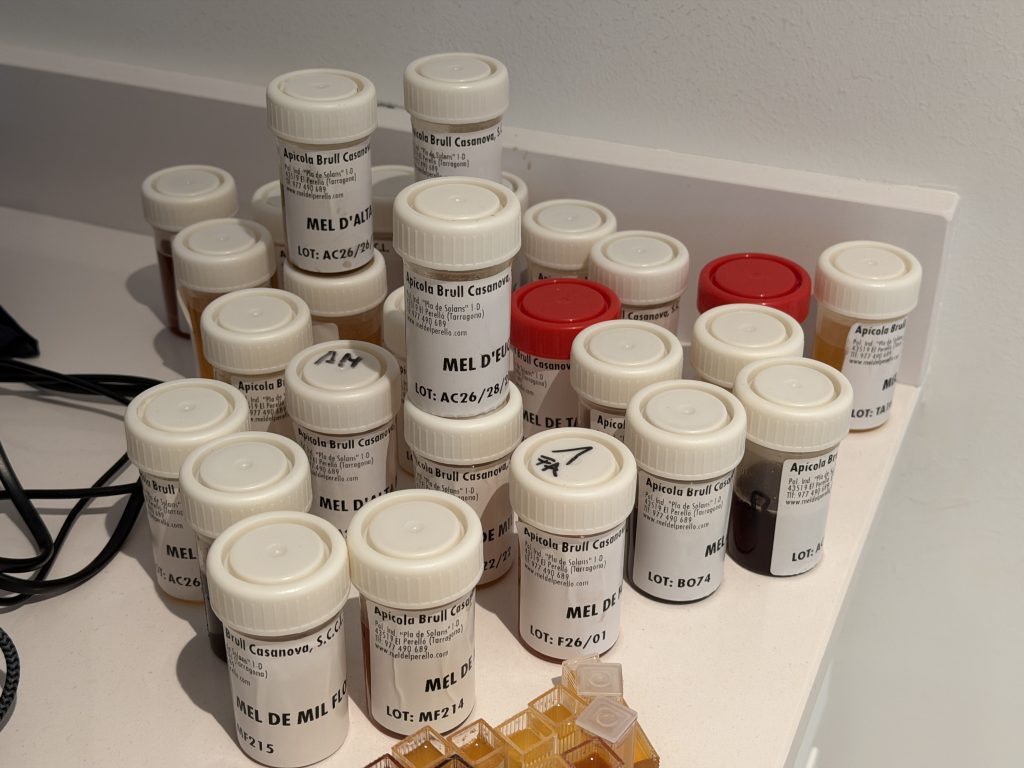
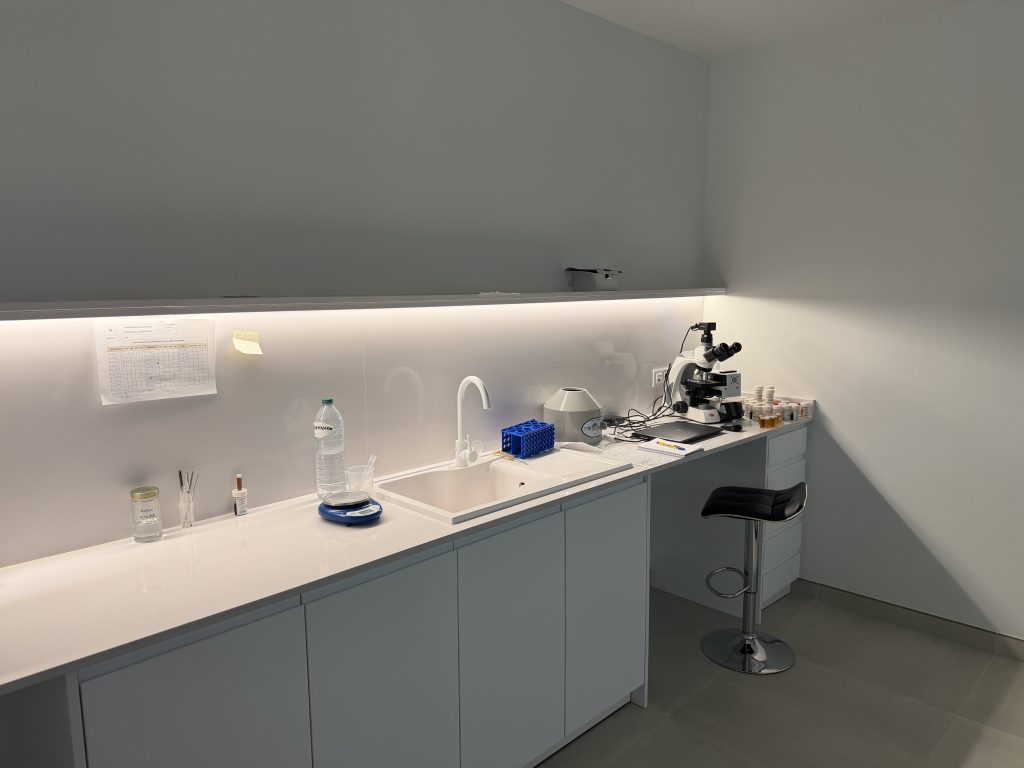
Behind every jar of honey there is far more than meets the eye. At Apícola Brull Casanova we have our own analysis space where we study our honeys to better understand their characteristics, their floral origin and how they evolve.
Because every honey is different and, to understand it, you first have to look at it closely.
THE ANALYSIS
WHAT DO WE ANALYSE?
One of the most interesting analyses is the pollen study. Honey contains pollen grains from the plants the bees have visited. By analysing them we can identify the different plant species present in a sample and learn more about its floral profile.
This study is especially useful for characterising honeys according to their botanical origin.
We can also study other characteristics of honey, such as colour, crystallisation, the presence of yeasts, conductivity or honeydew elements.
Honey.AI brings all these functions together in a single analysis device.
We also measure moisture and HMF, two key parameters for honey quality.
Moisture is the water contained in honey. The lower it is, the better the honey keeps and the lower the risk of fermentation.
We determine HMF with a spectrophotometer and it tells us how fresh the honey is. Spanish legislation sets a maximum of 40 mg/kg, precisely to guarantee that honey is fresh and keeps all its properties.
HONEY.AI
SEEING HONEY THROUGH DIFFERENT EYES
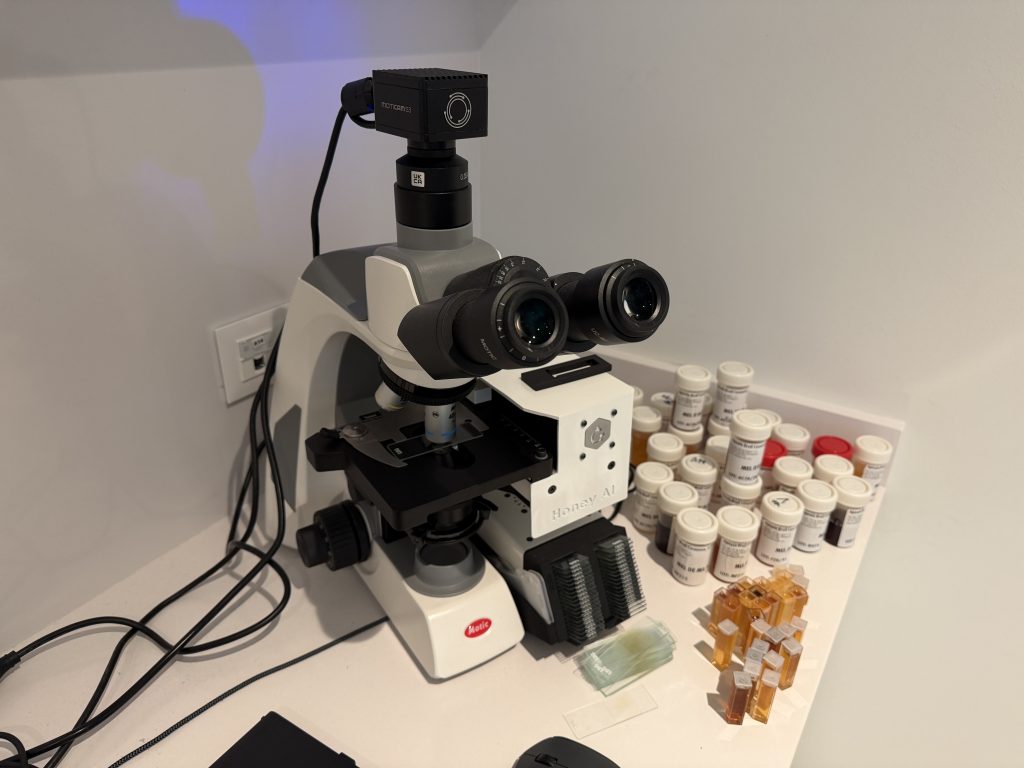
In our laboratory we have Honey.AI, a digital microscope that combines automated microscopy with artificial intelligence.
The device scans the honey sample and is able to identify, classify and count the different types of pollen present.
The system works with more than 90 pollen classes and keeps expanding its recognition capacity.
This gives us a far more detailed view of each sample and lets us discover which plants make up its pollen profile.
UNDER THE MICROSCOPE
A LOOK INTO THE MICROSCOPIC WORLD OF HONEY
What looks like simply honey to the naked eye is a whole world under the microscope.
We can observe the pollen grains and other elements present in the sample, and obtain information that helps us understand each honey better.
This information, together with other characteristics such as colour and conductivity, can help to characterise the type and botanical origin of the honey.
OUR COMMITMENT
FROM THE HIVE TO THE LABORATORY
Our work does not end when we extract the honey from the hives. Every harvest has its own particularities, and analysis allows us to deepen our knowledge of the product our hives give us.
In addition to what we analyse in our own laboratory, we follow an external analysis plan that certifies that all our honeys are free from plant protection product residues.
Beekeeping, knowledge and technology at the service of something as truly ours as honey.
We discover what is inside every jar.
